The short answer
Advertising copy is the text in a paid ad: the headline, the body and the call to action. To write it well, pick one action, write to one reader in their own words, lead with the benefit, add proof, and test several versions. Keep it short enough for the platform it runs on.
Ad copy works under a particular constraint: the reader never asked to see it. Someone searching for a repair, or scrolling past a friend's photos, did not come looking for your message. You get a headline's worth of attention before they move on, so the first job is relevance: showing that this ad concerns the thing already on their mind. Persuasion comes second.

Decide the action and the reader first
Before you write a word, choose the one action you want: a call or a booking. An ad that asks for two things usually gets neither.
Then describe the reader in one sentence, with a situation in it. "A small business owner who lost a week to a payroll error" tells you what to say. "Business owners aged 35 to 60" does not.
Gather the customer's own words
The phrases customers use about their problem usually beat the phrases you would invent. Read your reviews and call notes, and look for the words that repeat. Using them back to the reader is called word mirroring, and it works because the ad sounds like the thought they already had.
Next, read the ads running beside yours. Note what every competitor says, then look for something true that none of them says.
Use the headline, description and call to action structure
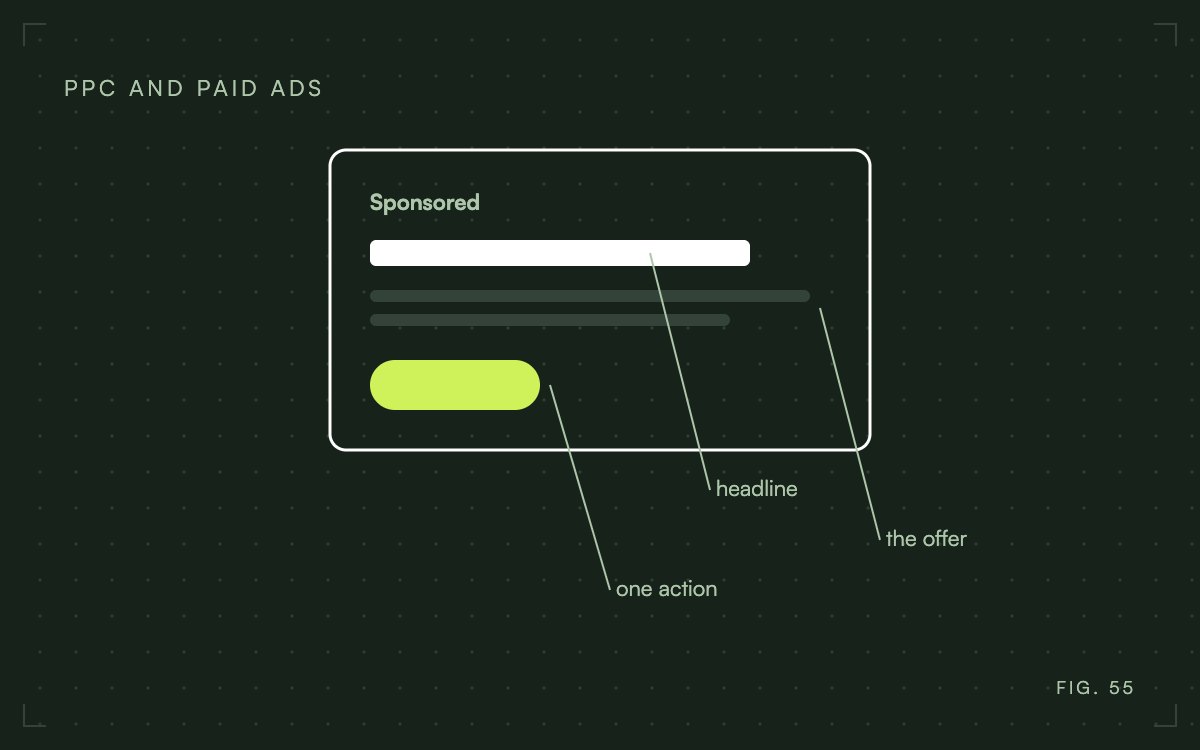
Nearly every ad follows the same frame. The headline hooks the reader, usually by naming the problem or the benefit. The description gives the detail that earns the click, such as a price or a proof point. The call to action tells them what to do next, with a plain verb like "Call today" or "Get a quote." If an ad is missing one of the three, add it before polishing anything else.
Rules for building the ad
These rules cover most ad edits.
Open with what the reader gets
"Cut payroll errors this month" beats "Quality accounting services" because it says what changes for the reader. Features support the benefit afterward. "Automatic backup" is the feature, and "never lose a file" is the benefit it delivers.
Match the search or the scroll
In search, the headline should echo the query. On social, it should speak to what the person is already interested in. Matching the message to the moment helps the ad feel relevant, and relevance affects whether the platform shows it.
Be specific when you can back it up
"Same day visits in Spring and The Woodlands" says more than "fast local service." Specifics tend to work better than vague claims, but only if they are true and you can show them.
Cut words that do not change the meaning
Read the ad out loud. If you run out of breath, trim it. Short copy is not always better, but every word should earn its place.
Write to one person
Say "you" and write for one reader's situation, not a crowd. A sentence that would fit any customer fits none.
Name the problem only if it is real
"Tired of missed calls?" works when missed calls are the reader's actual frustration. A question used as filler does nothing, so ask one only when it names a real problem.
Back the claim with proof
Proof answers the doubt the reader has but did not say. A review that names a specific problem you solved is the strongest form. Add ratings or years in business only if the numbers are accurate and current.
Skip clickbait
If the ad promises something the landing page does not deliver, you pay for a click and lose the customer. It also erodes trust with people who might have bought later.
Use keywords where they read naturally
In paid search, a keyword in the headline signals relevance to the searcher. Never force it. A stiff headline can lose more clicks than the keyword wins.
Make the call to action concrete
"Get a quote" is fine. "Get your quote in 10 minutes" is better, provided it is true. Tell the reader what happens after the click.
Let the image carry part of the message
On social and display, the image does much of the work. It should show the result or the situation. A stock photo of a handshake adds nothing.
Test one change at a time
Change the headline first, then something else, so you know which change moved the result. Judge versions on leads or sales, not clicks alone. The note on what a good CTR looks like helps you read click numbers sensibly.

Fit the copy to the platform
Paid search
Google responsive search ads take up to 15 headlines of 30 characters and up to 4 descriptions of 90 characters, according to Google's documentation. Google mixes them, so every headline must make sense beside any other. Spread your points across the set, so some headlines carry the keyword and others carry proof.
Social media
People are scrolling, not searching, so the first line before the "see more" cut has to earn the stop. Lead with the situation or the result, and keep paragraphs short. Match the tone of the platform, which is usually looser on Instagram and more direct on LinkedIn.
Display and video
Display ads leave room for one short headline and one button, so the benefit has to fit in the headline. For video, hook the viewer in the first few seconds, show the problem and then the fix. Add captions that carry the point, since many people watch with the sound off.
Stay within the advertising rules
Ads must be truthful. Section 5 of the FTC Act prohibits deceptive advertising, and the FTC's Endorsement Guides say endorsements must reflect honest opinions and that material connections must be disclosed. The FTC explains this in its advertising and marketing guidance. Each platform also has its own policies for sensitive categories such as health and finance, so read them before you launch.
Check the page the ad lands on
Strong copy sent to a weak page wastes the click. The headline on the page should repeat the promise made in the ad. The guide to landing page improvements covers that second half.
What to do this week
Pick one live ad and rewrite only its headline, using a phrase from a real customer review. Run both versions for a few weeks and compare leads, not clicks. Keep the winner, then repeat with the description.
Getting ads written and tested
WGM writes and tests ad copy as part of managed PPC, using the search terms that actually bring in customers. We start by reading your current ads against the search terms that convert, then report which lines to keep.
Frequently Asked Questions
What does AD stand for in advertising?
Ad is short for advertisement. In the paid media world it can refer to a single ad unit, such as one search ad or one social post, while ad copy refers only to the words inside it.
What is an example of ad copy for a service business?
For a plumber in Spring: headline "Water Heater Repair in Spring," description "Same day visits. Licensed plumbers. Upfront quotes before work starts," call to action "Call now." Use only claims you can honor, such as a license you hold.
How do I practice writing ad copy?
Take ads you scroll past, name why they fail, and write three better versions of each. Then run small tests with real budgets. Live results show what an audience responds to, which practice alone cannot.
How is ad copy different from other copywriting?
Ad copy targets a reader who did not ask for it and aims for one immediate action in very little space. Articles and sales pages have more room to explain and build trust before asking for anything.